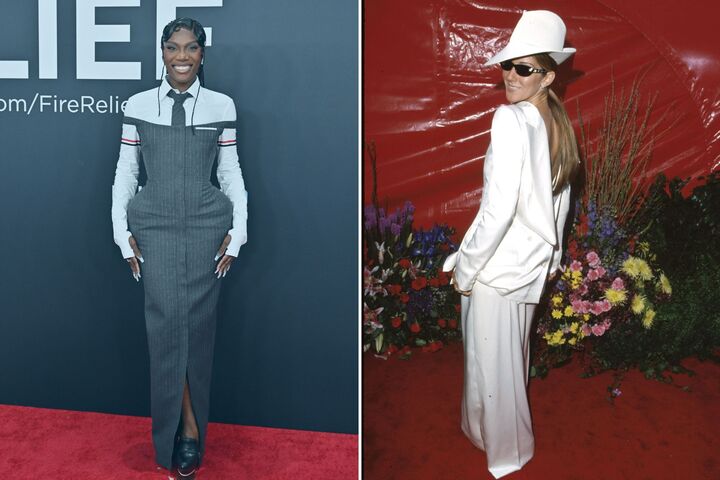
The Met Gala theme dropped with cryptic elegance—no bold declarations, no clear dress code, just a poetic phrase open to interpretation. Once again, the fashion world finds itself parsing syllables, dissecting press releases, and debating semantics. But this year’s theme isn’t just open-ended—it’s arguably the most ambiguous to date. That’s where the real work begins.
For celebrity stylists, ambiguity isn’t a roadblock. It’s the starting line.
Behind every jaw-dropping red carpet moment lies a strategist, a researcher, and an artist. The Met Gala, more than any other event, demands conceptual rigor. This year, with a theme that flirts with invisibility, transparency, legacy, and artistic reimagination, stylists aren’t just dressing bodies—they’re dressing ideas.
We spoke with four top-tier celebrity stylists—veterans of multiple Galas—to unpack how they’re navigating this nebulous brief. From literal interpretations to rebellious subversions, here’s how the pros are turning confusion into couture.
Why Ambiguity Fuels Fashion Innovation
“A vague theme is a gift,” says Misha Ruff, stylist to Zendaya and LaKeith Stanfield. “It means you’re not confined by a museum exhibit title or a decade. You’re invited to think.”
Past themes like “Heavenly Bodies” or “Camp” had visual anchors—religious iconography, theatrical exaggeration. But when the directive is abstract, the pressure shifts from replication to invention.
Ambiguity forces creativity. It demands that stylists and designers ask: - What does “exposure” mean in 2025? - Can clothing be both invisible and iconic? - How do we honor art without mimicking it?
This year, the theme dances around concepts of visibility, perception, and legacy—echoes of the “naked dress” era and the intellectual weight of something like the Mona Lisa. It’s not about a specific garment or moment in history. It’s about presence.
“People will show up either completely covered in symbolic armor or utterly exposed,” predicts Ruff. “Both extremes make sense.”
The Naked Dress Debate: Risk or Redundancy?
The “naked dress” isn’t new. From Kim Kardashian’s wet-look Givenchy at the 2013 Met Gala to Rihanna’s sheer Adam Selman gown in 2015, skin has long been a statement.
But this year, the naked dress is back in a different context—not as shock value, but as conceptual minimalism.
“It’s not about baring skin,” says stylist Alejandra Hernandez, who works with Florence Pugh. “It’s about intention. Is the body the canvas? Is the illusion of nothingness actually saying something?”
Consider the risks: - A sheer look can read as lazy if there’s no craftsmanship underneath. - Nudity without narrative becomes costume. - Sweat, lighting, and movement can ruin an otherwise bold vision.
“The most common mistake?” says Hernandez. “Thinking transparency means no structure. The best naked dresses have corsetry, embroidery, or strategic layering you only notice up close.”
Case in point: When Tracee Ellis Ross wore a crystal-webbed dress in 2018, it looked like shimmering skin. But the piece took 400 hours to construct. That’s the difference between a stunt and a statement.
Stylists this year are leaning into illusion—naked dresses with painted-on textures, body-mapped embroidery, or garments that appear sheer but are backed with symbolic linings (think: pages from da Vinci’s journals, fragments of classical poetry).
Mona Lisa Suits: When Art Becomes Attire
If the naked dress represents the body as art, the “Mona Lisa suit” is its intellectual counterpart—a sartorial nod to legacy, mystery, and the elevation of the ordinary.
“It’s not about wearing a painting,” says stylist Otis Williams, known for dressing Dev Patel and Paul Mescal. “It’s about capturing that aura. The quiet confidence. The enigma.”
Williams is developing a look for Mescal inspired by sfumato—the smoky, blurred technique da Vinci used in the Mona Lisa. Think: gradient tailoring, fabrics that shift in light, lapels that dissolve into shadow.
“It’s a suit, yes,” he says. “But the lapel is hand-painted with micro-transitions from charcoal to cream. The shirt has a faint anatomical sketch underneath, almost invisible unless you’re close. It’s not a costume. It’s a character.”
Other interpretations include: - Jackets lined with mirrored fabric, reflecting the wearer and the crowd—playing with perception. - Lapels shaped like the Mona Lisa’s curling smile. - Pocket squares printed with da Vinci’s mirror-writing.
“People dismiss tailoring as safe,” says Williams. “But a perfectly constructed suit can be the most radical statement at the Gala—especially when it whispers instead of shouts.”
How Stylists Are Bridging the Two Extremes
The most compelling looks this year won’t land neatly in the “naked” or “Mona Lisa” camp. They’ll exist in the tension between them.
Take stylist Naomi Nepton, who’s collaborating with Billie Eilish. “We’re building a look that starts sheer but transforms,” she says. “The outer layer vaporizes under UV light, revealing a structured corset embroidered with Renaissance motifs.”
- It’s a three-act story:
- Arrival: a translucent column dress, lit under cool white light.
- Entry: UV lighting shifts reveal hidden details—golden circuitry mimicking da Vinci’s sketches.
- Dinner: the outer layer is removed, exposing a sculpted bodice inspired by anatomical drawings.
“This is what the theme is about,” Nepton explains. “What you see isn’t what you get. Clothing as revelation.”
Other hybrid concepts in development: - A gown that appears solid from afar but dissolves into thousands of micro-sheer panels up close. - A tuxedo with a bodysuit base that mimics muscle structure, blending the nude form with intellectual precision. - A headpiece shaped like a frame, drawing attention to the face as the masterpiece.
The Danger of Over-Interpretation With so much conceptual ground to cover, it’s easy to overreach.
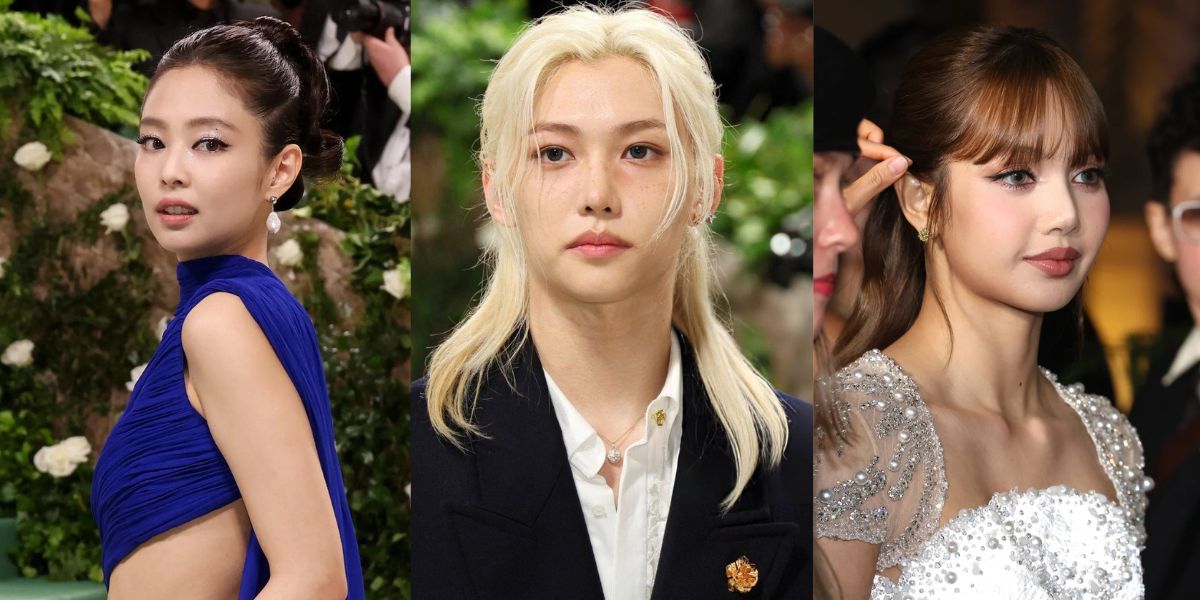
“The biggest pitfall?” says Ruff. “Forgetting the person inside the dress.”
Stylists warn against sacrificing wearability for theme fidelity. A look can be genius on paper but a disaster on stairs. Consider: - Can the celebrity sit, eat, or use the restroom? - Will the fabric cling under hot lights? - Does the concept survive movement?
“One year, we built a dress with embedded LED poetry,” recalls Hernandez. “Beautiful. But the battery died halfway up the steps. Now I always do a 48-hour wear test.”
Another common error: leaning too hard into irony. “Camp taught us that exaggeration works,” says Williams. “But ambiguity doesn’t need satire. It needs sincerity.”
The best interpretations this year won’t feel like parodies or literal translations. They’ll feel inevitable—like the theme was always pointing to that exact silhouette.
Real-World Examples That Inspired This Year’s Direction
Stylists aren’t working in a vacuum. Past Met Galas and avant-garde moments are guiding their choices.
- Björk’s swan dress (2001) – Ridiculed at the time, now iconic. Proof that risk pays off.
- Billy Porter’s Egyptian sun god entrance (2019) – A character, not just a costume.
- Zendaya as Cinderella (2019) – Storytelling through transformation.
- Bad Bunny’s mesh-and-pearl look (2023) – Naked dress with symbolic weight.
- Florence Pugh’s pearl-covered Schiaparelli (2024) – Art as armor.
These weren’t just clothes. They were narratives. And that’s the benchmark for this year.
“We’re not dressing for Instagram,” says Nepton. “We’re dressing for history.”
What to Watch For at the Gala When the first steps hit the red carpet, here’s what to look for:
- The Illusionists: Designers like Schiaparelli, Iris van Herpen, or Loewe, who blend technology and craft to play with perception.
- The Minimalists: A single, perfectly cut piece that says everything through restraint.
- The Subverters: Those who reject the theme entirely—wearing something defiantly ordinary as a statement.
- The Storytellers: Looks that transform or reveal layers over the course of the night.
- The Homage-Makers: Not copying art, but channeling its spirit—quiet, complex, timeless.
And don’t overlook the men. “The red carpet has been too focused on gowns,” says Williams. “This year, tailoring will steal the show.”
Final Word: Ambiguity Is the Point
The Met Gala’s most ambiguous theme isn’t a flaw—it’s the point.
It forces the fashion world to confront questions without answers: What is clothing, really? Is it protection? Expression? Illusion? Art?
Celebrity stylists, once seen as behind-the-scenes fixers, are now cultural interpreters. They’re the ones translating abstract themes into wearable philosophy.
So when you see that first sheer dress or that quietly brilliant suit, don’t just ask, “What are they wearing?” Ask, “What are they saying?”
Because this year, the silence between the lines is where the meaning lives.
Don’t just follow the trend—decode it.
FAQ
What should you look for in From Naked Dresses to Mona Lisa Suits: Stylists Decode the Met Gala’s Va? Focus on relevance, practical value, and how well the solution matches real user intent.
Is From Naked Dresses to Mona Lisa Suits: Stylists Decode the Met Gala’s Va suitable for beginners? That depends on the workflow, but a clear step-by-step approach usually makes it easier to start.
How do you compare options around From Naked Dresses to Mona Lisa Suits: Stylists Decode the Met Gala’s Va? Compare features, trust signals, limitations, pricing, and ease of implementation.
What mistakes should you avoid? Avoid generic choices, weak validation, and decisions based only on marketing claims.
What is the next best step? Shortlist the most relevant options, validate them quickly, and refine from real-world results.

/cities-skylines-5a0ef1eabeba3300375673ba.png)